

Discipline is about teaching. In fact, the word discipline is derived from the Latin word disciplina, which means instruction or training. It is also derived from the word discere, which means “to learn.” Basically, discipline centers on providing instruction and training for learning how to discern right from wrong, good behaviors from bad behaviors, and healthy decisions from unhealthy decisions.
If discipline is about teaching, what do we hope kids will learn from it?
Discipline Goal #1. To help children discern what is wise and kind from what is foolish and uncaring.
The first goal of discipline is to help kids learn right from wrong, good from bad. It’s basic common sense. It’s the MAP of Love and Logic:
Model healthy behavior:
In a counseling session with a couple, the dad apologized to his wife for taking his teenage sons hunting with some of his buddies. The other adults were drinking alcohol and swearing the whole time, and the dad felt bad for putting his sons in that environment. But the therapist pointed out that the dad didn’t drink or cuss, so it provided a great opportunity for the teens to see their dad as a role model. That’s the essence of discipline: teaching by modeling good behavior.
Allow safe mistakes:
Allowing kids to have experiences, live with the consequences of their actions, and solve their own problems is a critical component of discipline.
Provide empathy:
Showing kids you care about their feelings makes them feel respected. And that increases the likelihood that they will listen to you when you discipline them.
Discipline Goal #2. To help children learn when they are young and when the price tags are small.
Helping kids learn when the consequences are small—like broken crayons, missing out on recess, or even getting a poor grade on an assignment—is the key. At its core, discipline helps our children have less self-inflicted pain in their lives as they grow into adulthood. Think of it as a path to peace. Providing discipline early allows them to enjoy more peace and productivity.
Remind yourself of this any time your child is bawling, having a meltdown, or calling you the worst parent in the world. Tell yourself that what you’re doing is providing a teaching moment that will pay off in the future. A little short-term discomfort can lead to a lot more peace later on.
Unfortunately, it can be easy to miss out on this concept if your parenting style is centered on avoiding short-term discomfort rather than staying focused on our long-term goals. And to be honest, it’s usually your discomfort you’re trying to circumvent in these instances. If your child is throwing a fit in the grocery store, you may shove an iPad in their hands to soothe them rather than use that time for teaching, aka discipline. Much of this avoidance boils down to the fact that many parents want to keep appearances clean rather than messy. Ask yourself if you’re willing to deal with a little messiness now, so you and your children can have less mess later?
Discipline Goal #3. To help children develop self-discipline, so they can experience freedom.
One of the most common things we hear from tweens and teens is that they would like more freedom. Most of them think freedom should just be handed to them. What they don’t realize is that freedom comes at a cost. On a societal level, it comes at the cost of many brave men and women who defend our country. On a more personal level, it requires self-control and responsibility. As we tell the adolescents and teens we counsel, the secret to gaining more freedom is to become the kind of person that does not need to be micromanaged. When a kid proves that they can be responsible, respectful, and resilient, the doors to freedom open wide.
Discipline Goal #4. To help them learn how to remain mentally strong in the face of hardship.
Discipline helps kids learn how to deal with tough situations. In thinking about raising mentally strong kids, think about a simple can of coffee. You know, the ones that say vacuum-sealed for freshness. This may be ideal for coffee, but we don’t want to vacuum-seal our children’s lives so that they have no experience dealing with disappointments, difficult decisions, or discipline. If our children are protected from hardships, they won’t become the courageous, capable, and character-filled people we hope they will. Instead, they may become adults without the common sense or grit to wrestle themselves out of a wet paper bag.
Discipline Goal #5. To preserve our sanity and our relationships with our children.
The final goal of discipline is to strengthen our relationships and make life easier for ourselves. Typically, kids who grow up without loving discipline come to resent their parents, and their parents find themselves counting the days until their offspring become adults and leave home. Unfortunately, many of these kids never fully mature, and they don’t become independent. As such, the resentment and chaos often continue for a lifetime.
Healthy relationships always require the healthy development of good limits and healthy accountability, which are two fundamental aspects of practical neuropsychology.
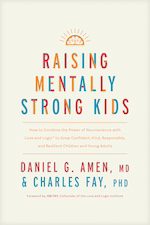
Adapted from Raising Mentally Strong Kids: How to Combine the Power of Neuroscience with Love and Logic to Grow Confident, Kind, Responsible, and Resilient Children and Young Adults by Daniel G. Amen, MD, and Charles Fay, PhD, releasing in March 2024.
 Daniel G. Amen, MD, has helped millions of people change their brains and lives. He is the founder of Amen Clinics with 11 locations across the United States, an 18-time national bestselling author, and the creator of online videos about the brain and mental health that have been viewed over 300 million times. He has written and produced 17 national public television specials about the brain that have aired more than 150,000 times across North America. Dr. Amen believes we can end mental illness by creating a revolution in brain health, and he regularly speaks to businesses, organizations, and churches about how to have a better brain and a better life.
 Charles Fay, PhD, is an internationally recognized author, consultant, and public speaker. He is also president of the Love and Logic Institute, which became part of Amen Clinics in 2020. Millions of educators, mental health professionals, and parents worldwide have benefited from Dr. Fay’s down-to-earth solutions to the most common and frustrating behaviors displayed by youth of all ages. These methods come directly from years of experience serving severely disturbed youth and their families in psychiatric hospitals, public and private schools, homes, and other settings. For more information, visit loveandlogic.com.