
There comes a time to move and to act.
God commanded his people to do the impossible and step into the flooding waters: “Yet as soon as the priests who carried the ark reached the Jordan and their feet touched the water’s edge, the water from upstream stopped flowing. It piled up in a heap a great distance away, at a town called Adam in the vicinity of Zarethan” ( Joshua 3:15-16).
We cannot explain how a river stopped flowing, allowing thousands of people to walk across a dry riverbed. Where did the water go? How fast was the flow? We don’t know these details. We do know the whole group crossed over like their forefathers at the Red Sea. When they finished crossing, the priests took the Ark out of the riverbed. The water started flowing again at flood stage. How did this work? It is part of the mystery of God. Sometimes we shouldn’t press the way of miracles.
God did not stop working during biblical times.
Today, he wants to do great things for the honor of his name and the good of his people. We don’t know what all those things will be. But we do know Jesus wants to restore what is good, beautiful, and true. He’s not giving up on the church, and he’s not giving up on you. But we will need to be ready to go a new way—right through our own impossibilities.
Before the priests brought the Ark out of the river, the Lord told Joshua to have representatives from the twelve tribes carry twelve stones out of the riverbed and set them up as a monument. The collected stones were to remind the people of God’s intervention. Joshua said, “In the future, when your children ask you, ‘What do these stones mean?’ tell them that the flow of the Jordan was cut off. . . . These stones are to be a memorial to the people of Israel forever” ( Joshua 4:6-7).
God loves to use symbols to trigger our memories.
They remind us of greater realities. A cross reminds us of the sacrifice Jesus made for us. A Communion table helps us to recall God’s presence among us. An open Bible reminds us of God’s Word to us. Lighted candles remind us of the presence of God here in our midst and our call to be the light of the world. We need such symbols to remember God is among us, leading us on a way we have never been before.
The future of the church looked dubious after Peter and Paul were killed in Rome. Christianity seemed like a tough sell as an alternative to the Roman narrative. The future of the church looked doubtful when it got off track just prior to the Reformation. It looked doubtful in 1720 when decadence ruled before a Wesleyan revival came. It looked dubious in 1799 when Timothy Dwight was president of Yale until revival broke out—the Second Great Awakening.
Your life right now may be in a complicated place as you face a river at flood stage. Jesus is beckoning you to step into the water with him and trust. To be attentive.
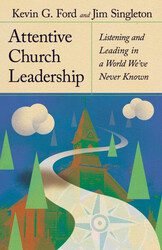
Taken from Attentive Church Leadership by Kevin G. Ford and Jim Singleton. ©2024 by Kevin Graham Ford and James Martin Singleton Jr. Used by permission of InterVarsity Press. www.ivpress.com.
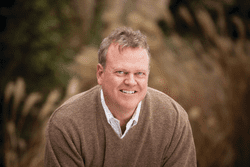 Kevin G. Ford (MDiv, Regent College) is the chief catalyst of Leighton Ford Ministries. He was the cofounder of TAG Consulting, which he and his partners sold in 2019. Kevin’s areas of expertise include leadership, organizational culture, and strategy. He has facilitated the development of over five hundred strategic plans throughout North America. His clients included Fortune 500s, small businesses, and government agencies. But his passion has always been for the church. He has spoken publicly to thousands of people around the world and is in constant demand as a facilitator and speaker. His books include Transforming Church, The Leadership Triangle, and The Secret Sauce.
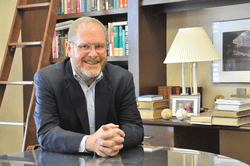 Jim Singleton (ThD, Boston University School of Theology) is a coach and discipler at Leighton Ford Ministries. He has been both a longtime Presbyterian pastor (San Antonio, Austin, Spokane, and Colorado Springs), and professor of pastoral leadership and evangelism at Gordon-Conwell Theological Seminary. Jim is one of the founders of ECO: A Covenant Order of Presbyterians, which sponsors the Flourish Institute of Theology, where Jim also teaches.