

I love the Bible, even the weird parts—maybe especially its unusual stories—and read it aloud every morning before dawn (followed by a sometimes off-key hymn greeting the new day) with my wife, Cindy, who continues to recover from a stroke that affects her speech. Initially, she could not speak at all, a frightening reality for a bubbly and loquacious woman who taught high school English her entire career, a vocation centered upon words.
The Power and Mystery of Miraculous Stories in the Bible
The Bible is a library of events first shared orally that occurred well before various writers took stylus to scroll, followed by centuries of debate that ultimately stitched the stories, letters, travails, and feats of faith into various books bound together in a single volume. It makes sense to regularly read this large and sometimes imposing bestseller aloud, pondering how the strange tales may have first sounded to incredulous ears and timid tongues like mine.
Daily Reflections on the Bible’s Miraculous Tales
A bald prophet enlists a pair of angry she-bears to maul a band of impertinent boys who mocked his lack of hair (2 Kings 2:23–25). A cheeky burro balks, speaks in an understandable human tongue, and prevents a misguided seer from making an ass of himself (pun intended; Num. 22:22–40). A young man falls asleep while sitting in a window during one of Saint Paul’s lengthy sermons (maxing out at midnight), falls three stories to his death while snoring, and is brought back to life amid the nighttime ruckus that surely ensued on the street below (Acts 20:7–12). A beloved disciple named Tabitha (Dorcas in the Greek; both names mean “gazelle”)—known for lots of sacrificial running around for others, acts of service that matched her moniker—dies from a mysterious disease and then later breathes the air of new life right there on the second floor of the funeral home, surrounded by once weeping and now ecstatic widows (Acts 9:36–43). After praying for three weeks with no hint of an answer, a faithful captive in a foreign land finally receives a visit from an angelic messenger who assures the frustrated intercessor that his prayers have indeed been heard from the beginning, the tardy response blamed on a titanic divine wrestling match over the airspace of Persia with certain forces of darkness (Dan. 10:10–14).
Why These Miraculous Stories Captivate Our Attention
Why are these fabulous stories (and many others like them) included in the Bible? And why do they captivate my daily attention? Did Thomas Jefferson have it right when he took scissors to these weird tales and pasted back together a version of the Bible that seemed better suited for reasonable people with common sense? What motivates me to place ultimate trust in the mysterious power revealed in these strange narratives, described in a hymn that Cindy and I sang one recent Tuesday at dawn?
Unpacking the Unusual and Unbelievable
Mortal pride and earthly glory, sword and crown betray our trust; what with care and toil we fashion, tower and temple, fall to dust. But thy power, hour by hour, is my temple and my tower.
Theological Insights from Miraculous Bible Narratives
Thinking back in various parishes I served, it’s difficult to count how many young parents chose to decorate a new baby’s nursery with Noah’s gargantuan sailing vessel and smiling long-necked giraffes stretching into a cumulus cloud-filled sky bracketed by a multicolored rainbow. I love the various theological nuances in that old story (Gen. 6–9). For example, the Hebrew word for “ark” in this watery narrative appears only here in the Old Testament and just one other place: to describe the little “basket” (Exod. 2:3) that saved baby Moses from the maniacal genocide of a nervous Egyptian Pharaoh who attempted to kill all Israelite baby boys because the enslaved foreigners were getting far too numerous and strong.
The Deeper Meanings Behind Miraculous Events
The story of Noah and his miraculous ark—the massive floating basket filled with everything from baboons to bandicoots—evokes powerful themes of salvation and liberation. Christian writers would pick up on these same themes of a saving boat (the church) and the watery, liberating connection to baptism (see 1 Pet. 3:20– 21). One could argue that any story of Jesus involving a floating mode of transportation is essentially a tale about life in the church and its saving mission. Since its inception in 1948, the World Council of Churches has used a boat as their main promotional logo.
Implications of Miraculous Stories for Modern Faith
I’m pretty sure, however, that parents of my pastoral acquaintance spent little time pondering the flipside darkness lurking below the colorful rainbow adorning the nursery wall above their new baby’s crib: a global flood that killed all but a chosen few; a divine slaughter authored by the God who decided creation was all a big mistake. These old miraculous stories often raise questions about the nature of God and require ample time to unpack and explain, not only for adults but also older children who are paying attention. Why pause over them when there’s enough darkness in the world already?
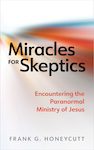
Excerpted from Miracles for Skeptics: Encountering the Paranormal Ministry of Jesus by Frank G. Honeycutt ©2024 (Wm. B. Eerdmans Publishing Co.). Reprinted by permission of the publisher.