

I began writing short prayers, or what is simply called a “collect,” on March 15, 2020—the day that our country shut down on account of the coronavirus. At first, it was simply a way for me to cope with my own fears over an uncertain future. I’d written such prayers here and there, and I’d assigned them over the years to my students at Fuller Theological Seminary, but I now wrote them as a kind of daily spiritual exercise, and a rather desperate one.
Understanding Collect Prayers in Daily Life
Often after posting my prayers on social media, I found that they resonated with people across denominational and political lines. They gave voice, it seemed, to things many Christians believed God would never be interested in. My hope, of course, was to persuade readers otherwise—that God was, in fact, interested in hearing everything that we have to say to him in prayer. God cares little about whether we get our prayers “right” or whether we tidy up our lives prior to making our intercessions known. True piety, as the psalmists repeatedly suggest, ought not to be a precondition for talking to God. Showing up is all that’s needed, as well as a commitment to being brutally honest with God—honest about our doubts, honest about our anger about unanswered prayers, honest about the failures and fears we might be ashamed to admit out loud, among others.
The Spiritual Benefits of Writing Collect Prayers
All aspects of our lives must be prayed, then, lest we become atheists in the quotidian parts of our lives because we have come to believe that these parts are, in fact, godless, devoid of God’s interest and care. But that is not the kind of God we encounter in the Psalms, nor in the life and ministry of Jesus, whom the book of Hebrews calls the true Pray-er. He is the infinitely gracious one who eagerly welcomes our whole selves, along with all the details of our lives.
Connecting with God Through Collect Prayers
The Origin and Significance of Collect Prayers
While covering a good deal of ground, the collect is notable for its economy. It’s a blessedly short prayer. It’s short because it typically revolves around one idea only, which in principle is drawn from Scripture. In doing so, several benefits accrue to the one who prays it. Most basically, it invites us to call to mind what God has done in the past before we make our present petitions known. We remember before we request, and we look back on the faithfulness of God in the lives of others prior to welcoming the faithfulness of God in our own. The collect also offers an opportunity to discover how the triune God attends to the details of our lives. God is intimately interested in those specific aspects of our lives—doing laundry, suffering illness, aging rapidly, fighting traffic, spending time with a friend— where we find ourselves actually believing, or disbelieving, that God wishes to meet us in the pain and pleasure of our life’s circumstances.
How Collect Prayers Impact Our Faith Journey
The stuff of life, then, that populates collect prayers is of a concrete sort, without being distractingly subjective, and in this way the prayers offer themselves as universally accessible, capable of being prayed by all sorts of people in all manner of life settings.
Practical Tips for Writing Your Own Collect Prayers
O Lord, you who are the Way of Life, may we walk in your ways this day, we pray, looking to the signposts of your word for guidance and receiving the encouragement of the saints of old for sustenance, so that the demanding, narrow road might become the beloved pilgrim way of our lives. We pray this in the name of the One who walks with us on the way, Jesus Christ himself. Amen.
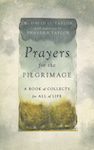
Adapted from Prayers for the Pilgrimage by W. David O. Taylor. ©2024 by W. David O. Taylor. Used by permission of InterVarsity Press. www.ivpress.com.
 W. David O. Taylor (ThD, Duke Divinity School) is Associate Professor of Theology and Culture at Fuller Theological Seminary and the author of several books, including A Body of Praise, and Glimpses of the New Creation; he is also the editor of For the Beauty of the Church as well as co-editor of Contemporary Art and the Church and of The Art of New Creation. His latest book is entitled Prayer’s for the Pilgrimage.