

When the going gets tough . . . most leaders freak out.
We don’t want to think it is so. We love the idea that if we are called on to call the shots, we will rise to the occasion and lead our teams through any challenge with creativity, poise, and patience. But mostly, the very same altruistic, visionary, compassionate, inspiring people we aspire to be become—when under fire—little Caesars determined to get our way.
Understanding the Threat-Rigidity Response
Writing on research from the 1980s that defined what has been called “threat-rigidity” response, Columbia Business School professor Rita McGrath explains that the very experience of being “under threat” or even just being criticized or questioned tends to bring the worst out in most leaders. We “narrow [our] focus of attention, fall back on habits from the past, and simplify in a way that doesn’t take account of the true challenge.”
For McGrath, the real problem with the threat-rigidity response is that when threatened, leaders become control freaks making rigid demands and passing new policies (like ordering everyone back to the office after they have become accustomed to remote and hybrid work) that are mostly about feeling in control.
Why Leaders Struggle with Resistance
Even more challenging, in situations that call for adaptive leadership—that is, situations where, by definition, leaders are out of control, where there are no best practices, where we will have to learn as we go, where we will have to let go of many of the strategies of the past, where we will have to experiment our way forward—it is normal for leaders to face resistance from our followers, and this makes our sense of feeling out of control even worse. At the very moment when we are trying to lead a new initiative, we get resistance from and even are sabotaged by our own people. And most of the time we have no idea how to respond to it—which just reinforces the cycle of feeling out of control, trying to control others, and getting more resistance from those who don’t want to be controlled.
Sigh. No wonder there are times when we just want to either give up or fire everyone and start with a new team.
Adaptive Leadership in Challenging Times
At the same time, organizational resistance is not a reliable indicator of whether a new idea has merit. The new idea that we are trying to get our team to embrace may or may not be a good one—it is far too early to tell. But there will be resistance anyway!
Resistance is like water surrounding a fish. It is present all the time. And any time a leader brings new ideas or plans to an organization, resistance and sabotage is to be expected.
Developing Resilience to Lead Through Resistance
Once leaders are able to understand that resistance to a new idea, plan, or project is a normal response to the change in the emotional balance in the group, healthy leaders can then adjust their own responses to keep the change process progressing. But for well-spoken, visionary leaders who are skilled at moving an organization forward through charisma, power, or sheer will, this insight is itself disruptive. It may require a much deeper process of personal formation to develop the tempered resilience to lead in the face of the resistance of your own people. At the very least, the old mindset and connected skill set for getting your group to go along with the change have to be set aside and a new way of leading must emerge.
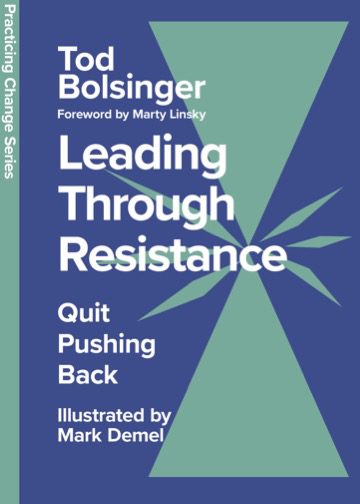
Adapted from Leading Through Resistance by Tod Bolsinger. ©2024 by Tod E. Bolsinger. Used by permission of InterVarsity Press. www.ivpress.com.
 Tod Bolsinger is the founder and principal at AE Sloan Leadership Inc., the executive director of the DePree Center Church Leadership Institute, and associate professor of leadership formation at Fuller Seminary. He is the author of the Outreach Magazine Resource of the Year in pastoral leadership, Canoeing the Mountains, and the Christian Book Award Finalist, Tempered Resilience. His latest series release includes four books across The Practicing Change Series: How Not to Waste a Crisis, Leading Through Resistance, Investing in Transformation, and The Mission Always Wins.