

When God Leads Us the Roundabout Way
In an American dream paradigm, the graph of formation and leadership follows a line up and to the right, where our maturity and sphere of influence only keep increasing. I have seen a lot of young leaders stumble because of this linear assumption, in two ways. One group of leaders assumes that God’s favor will always be shown in an increase toward the next challenge, the next level of responsibility, and the next level of comfort and privilege. Then when they experience something different (for example, a significant failure at work), they become discouraged, depressed, or angry toward God.
Why the Roundabout Way Challenges Our Expectations
Another group assumes that God has assigned them to always increase in leadership. After a few promotions or successes, they consistently push for more authority and choose to go forward with it. In due time, these leaders’ authority exceeds their character and they crash in moral or emotional failure.
God’s ways often don’t match our linear assumptions. If you read the stories of the saints, you find that comfort, wealth, and success do not always increase over time. In experience, the Lord leads his faithful people in progress toward his kingdom purposes, but then seemingly toward failure and desperation, and later to more progress. We experience loss, victory, disorientation, comfort, and desolation. Sometimes the changes are so extreme it feels like whiplash in our souls.
The Roundabout Way in Scripture
The people of God experienced this whiplash as they followed the pillar of cloud and fire through the wilderness. As he recorded their experience, Moses called it “the roundabout way”:
So God led the people by the roundabout way of the wilderness toward the Red Sea. (Exodus 13:18 NRSVCE)
Remember how the Lord your God led you all the way in the wilderness these forty years, to humble and test you in order to know what was in your heart, whether or not you would keep his commands. (Deuteronomy 8:2)
Lessons from the Wilderness Journey
As leaders, we usually prefer the direct route. We like to achieve results as efficiently as possible. When God delivered the Israelites from slavery, he took them to the wilderness for worship. From the wilderness, they likely expected that God would lead them directly toward the Promised Land. However, the Lord led them the roundabout way toward the Red Sea and later through forty years of wilderness wandering. The turn toward the Red Sea brought the people of God into a true crisis, as the Egyptian army bore down on them with murderous rage. The people were trapped and vulnerable. There was no path of escape. They depended on the Lord for a miracle, and he delivered them across the sea and killed their enemies. This resulted in a quintessential moment of worship on the far shore, where Moses and Miriam led the people in singing to the Lord (see Exodus 15:1-21). God fulfilled their going into the wilderness to worship, but he did it in a more difficult way than they imagined.
Learning to Trust God in the Roundabout Way
Deuteronomy tells us that the long, forty-year winding path through the wilderness was for God’s people to learn to trust God’s words and provision (see Deuteronomy 8:2-5). In the wilderness God taught them again and again to trust and follow him. Though it was difficult for the people to understand, God was doing a deep work of
formation in them. In some ways it was like a honeymoon for the Israelites to become more intimate with God. Thomas Merton describes it this way:
The Desert Fathers believed that the wilderness had been created as supremely valuable in the eyes of God precisely because it had no value to men. The wasteland was the land that could never be wasted by men because it offered them nothing. There was nothing to attract them. There was nothing to exploit. The desert was the region in which God’s Chosen People had wandered for forty years, cared for by God alone. They could have reached the Promised Land in a few months if they had traveled directly. God’s plan was that they should learn to love Him in the wilderness and that they should always look back on the time in the desert as the idyllic time of their life with Him alone.
God leads in roundabout ways we don’t understand, because God sees something better for us. His purposes within and among us are as important to God as his purposes in transforming the world. How, as leaders and disciples, can we best discern his paradoxical leading?
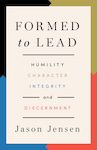
Adapted from Formed to Lead by Jason Jensen. ©2025 Jason Jensen. Used by permission of InterVarsity Press. www.ivpress.com.
 Jason Jensen (MA, Fuller) is vice president of spiritual foundations for InterVarsity Christian Fellowship/USA. Jason led InterVarsity staff teams in Berkeley, California, for twenty-nine years. He and his wife, Susi, are based in Madison, Wisconsin, where Jason oversees the formation of InterVarsity staff in Scripture, theology, spiritual formation, and prayer. Jason is the author of Formed to Lead: Humility, Character, Integrity, and Discernment.