

There are many great movements of God’s Spirit happening around us. Clean water. Bible translation. Child sponsorship. Creation care. International promotions of peace. Racial justice. Evangelism and world missions.
Among the most powerful movements in this second quarter of the twenty-first century is the attention toward mental health care. After hearing about our research, a respected Christian psychologist commented, “For our time, the church has the attention of the world. A world that is hungry and thirsty for the message of the gospel delivered through relational care.”
Why Mental Health Ministry Matters Today
We see four important truths about the culture and the church today that make care ministries an important part of every church.
Truth #1: Mental health is a primary language in our culture—which gives the church an opportunity to be the translator.
Our era is characterized by the near obsession with how we feel. Demand for therapy, medication, healing retreats, and “three steps to fix your marriage” is at an all-time high. Some of the most popular videos on any social media platform are those that dive into whether a particular symptom or feeling is an indication of a mental health condition. Is my desire to avoid that dinner party a sign of social anxiety disorder? Your husband’s attitude is clearly a signal of narcissism. Here’s how ADHD changes your brain.
That’s not to say that those presentations are bad! In fact, many of them are extremely helpful—even essential. But it’s telling that even when considering something quite serious, what we really want is to be entertained. So many of us don’t want to think; we want to be amused and handed a quick fix.
Yet amusement only goes so far. When something happens to jar our thoughtlessness, we suddenly look up and look around. When life takes an alarming turn and we’re flooded with emotions such as anger, fear, or despair, or when our behaviors have led to harm, we want answers. We want real help. We want meaning and purpose. Enter the church as the healing way station for those looking to make sense out of senselessness.
Shaken people walk into the church looking for wisdom and care. Asking for connection and answers. What a tremendous opportunity—and responsibility—for the caring person and for the community that offers those answers. What a tremendous moment to extend the outstretched hand of Jesus.
Mental Health Ministry Is Not a Solo Calling
Truth #2: You can’t do it alone—and you don’t have to.
A consistent theme offered by the more than two thousand pastors, church leaders, and mental health professionals in our research was the sheer scale of the need—and the reality that pastors and clinicians cannot address it alone. A pastor and leader in care ministry summarized the experience of so many clergy:
Pastors have a lot of mouths to feed when it comes to ministries. Pastors are overwhelmed, and they’re just trying to go and do what they’re taught to do at seminary. Preach, do discipleship, youth ministry, worship, kids ministry. That’s about what most pastors have the bandwidth to handle. And so even though it’s important to have some sort of in-house mental health option, it sometimes feels like it’s just one more thing that they have to do.
We find that this is a “Jethro moment.” The church community can act toward pastors as Moses’ father-in-law served him, asking, essentially, “Why do you have to do it alone?” (Exodus 18:14). Enlist others around you, and multiply yourself exponentially.
Mental Health Ministry Strengthens Discipleship
Truth #3: The church community can do this—and it works.
Given the long-standing default of professional referrals and the lack of history with lay mental health ministry, it’s understandable that some pastors feel a bit unsure about how to do it. But stepping into this space doesn’t mean you have to have it all figured out at the beginning; you primarily have to find one or more people who are willing to help figure it out together. While hardly a church caregiver, General George Patton has resonance here: “Never tell people how to do things. Tell them what to do, and they will surprise you with their ingenuity.”1
Multiple church leaders on our survey raised a very important point while considering this new area of ministry. One pastor said, “The one question I would most want to ask a leader already in this space is, What effect has mental health ministry had on the overall culture of your church?” Multiple church leaders questioned, “Would attention be taken away from discipleship and evangelism?” So we asked those who already had these ministries.
Mental Health Ministry That Actually Works
In a study of more than 1,900 help seekers who completed a lay-led church mental health program, the participants reported:
- trusting in God (96 percent)
- experiencing freedom from their presenting struggle, such as anxiety or addiction (96 percent)
- understanding how to deal with conflict well (93 percent)
- forgiving others (94 percent)
- receiving forgiveness from others (88 percent)
- spending regular time in God’s Word (85 percent)
- experiencing trust in the church (80 percent)
Those are discipleship measures! And those outcomes arose from a purposeful program with trained and supervised lay helpers walking alongside those in need.
Imagine, one year from now, if those in your church were able to answer the same way as those respondents, and how it might change the culture.
Mental Health Ministry as Gospel Love in Action
Truth #4: The ultimate objective is to love as God loves . . . and to give ourselves away.
In our interview with Kay Warren, she shared a crucial concept that can help us overcome our reluctance to address mental health issues in the church.
She explained that when we say, “Oh, there’s a person with mental illness,” we get squirrelly. We assume that’s not our wheelhouse. Maybe a professional should help them. Then she said, “But if you shift the emphasis and you say, ‘Oh, there’s a person with mental illness,’ then suddenly it’s like, ‘That is the exact place the church needs to show up.’ Because nobody knows how to take care of the person like the faith community. That’s our job—to care for people.”
Many pastors ask, “Of all the things going on in my church community, of all the other priorities, why should we offer this type of care ministry?” Our answer is this: because mental health ministry touches everything and will lead to an explosion of the exact discipleship and love you’ve been working to instill—and will take a weight off your shoulders. Because it’s through the community of the church that humanity can experience shalom—the shalom that consists of right relationship with God.
People came to Jesus because of every physical and emotional issue imaginable—and as He brought healing, He gave them peace. Churches are called to do the same today.
- We Are The Mighty, “11 Gen. George Patton Quotes That Show His Strategic Awesomeness,” Military.com, August 5, 2021, https://www.military.com/history/2021/08/05/11-general-george-patton-quotes-show-his-strategic-awesomeness.html.
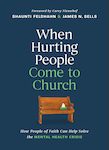
Adapted from When Hurting People Come to Church: How People of Faith Can Help Solve the Mental Health Crisis by Shaunti Feldhahn and James N. Sells, releasing in September 2025.