
Three parents sip coffee and huddle in a circle during a break at a parenting seminar. They came highly motivated to be the very best parents they could be, but each had been hitting some setbacks.
“I don’t know why I have such a hard time breaking these bad habits! I don’t want to yell,” says Louise, “but it seems like my mother’s words come out of my mouth anytime I have to discipline my kids.”
Taylor nods. “I know what you mean! My parents didn’t yell, but they made me feel bad with lots of guilt trips,” he says. “The other day I found myself sounding just like my dad, telling my son, ‘After all that I do for you, this is the way you treat me.’ It makes me sick to admit it.”
“My parents were always so legalistic,” Jose laments. “I never felt like my brother and I could have any fun. Now I’m realizing that I go to the other extreme with my kids. I’ve been way too permissive, and now their behavior is really showing it.”
How Our Beliefs Shape Christian Parenting
Perhaps the biggest challenge in parenting has very little to do with the kids in our homes but the ones in our heads. These “kids” are the beliefs and ideas we were raised with, as well as the ones we adopt and choose to dwell on as adults. When we take time to stop and examine them, we may be surprised to discover that they drive us to respond to our children in ways that are at odds with our love for Christ and for them.
Simply put, our deepest beliefs impact how we parent, and how we parent impacts what our children will come to believe. If what they believe becomes the filter through which they interpret everything—ultimately determining how they choose to think, feel, and act—then our work is to help them develop a truth-oriented filter. This will dramatically increase the odds that they will move in the direction of healthy spiritual growth rather than being led astray by the ever-changing philosophical winds of this world. We are best positioned to do that work when we first begin to confront what we truly believe.
Teaching Children to See Life Through God’s Truth
It’s important to emphasize what I mean by a “truth-oriented filter.” To be clear, the truth I am talking about is God’s truth as revealed in His Word, the Bible, not our culture or our own personal desires. Reflecting the character of God, the Word of God is eternal, unchanging, life-giving, grace-filled, and powerful beyond our comprehension. God’s character does not always leave us feeling comfortable, but His truths will always move us toward greater godliness and peace.
Why Happiness and Good Behavior Aren’t Enough
A belief that many conscientious, loving parents hold is that “good” parents make sure their kids are both happy and well-behaved. When I ask people what they want for their kids, most include these two characteristics at the top of their list. Certainly my wife, Monica, and I have always wanted our boys to be happy and well-mannered. Both desires are normal and good as long as they are not elevated above our children having their own relationship with Jesus Christ.
Let’s first consider whether the priority of happiness passes the truth-oriented filter. Have you ever noticed that the apostle Paul never mentions it as one of the signs that God is at work in our lives?
The fruit of the Spirit is love, joy, peace, patience, kindness, goodness, faithfulness, gentleness, self-control; against such things there is no law.
Galatians 5:22-23
Understanding the Difference Between Joy and Happiness
Notice that joy makes the list, but happiness does not. Why? From a Christian standpoint, joy is God-centered. It comes from God and our relationship with Him, and it brings glory to Him. Unlike happiness, it is not dependent upon fulfilled desires or favorable circumstances.
If we are parenting our children to be spiritually strong, happiness cannot be our main priority; after all, teaching our children to dwell on what is true will not always make them happy. In fact, the more faithful they are to God, the more opposition they will face from others who are doing wrong. They will also experience discomfort when they stray from what they know is right.
God wants something far better for our children than merely the pursuit of happiness. Could it be that service, sacrifice, and honoring Him bring greater and more enduring blessings?
Building a Strong Spiritual Foundation for Our Children
Focusing on this truth enables us to build our spiritual house upon solid rock rather than shifting sand:
Everyone then who hears these words of mine and does them will be like a wise man who built his house on the rock. And the rain fell, and the floods came, and the winds blew and beat on that house, but it did not fall, because it had been founded on the rock. And everyone who hears these words of mine and does not do them will be like a foolish man who built his house on the sand. And the rain fell, and the floods came, and the winds blew and beat against that house, and it fell, and great was the fall of it.
Matthew 7:24-27
We will never regret teaching our children to pursue and serve God rather than their personal comfort or happiness. This perspective will never let them down, even when the storms of life come their way. When they learn to focus on seeking His truth, He will reveal the best ways for them to think and live. Although they will still face some strong winds, rain, and rising waters, they won’t have to live in constant anxiety, fear, or despair. They can experience joy.
Why Good Behavior Alone Cannot Produce Authentic Faith
Now let’s consider the belief that raising well-behaved kids will cause them to become spiritually strong and right with God. Does this notion really pass the truth test? No. The Bible is clear: No one can earn entrance into heaven with even the very best conduct. We are saved by grace through faith in Jesus Christ (see Ephesians 2:8-9). Politeness, kindness, and other positive behaviors are good, but they can’t meet God’s holy standard. They have no power to save anyone from eternal suffering and separation from God (see Isaiah 64:6).
Protecting Children from Cultural Lies with Biblical Truth
Being happy and polite will also not protect our children from picking up the lies that show up everywhere in our culture—whether it’s the false belief that their value comes from outward appearance or excellence in athletics, academics, or other endeavors, or the idea that they are free to think and be whatever they want. What does provide spiritual protection is steeping them in God’s love and truth found in a relationship with Him and the words of the Bible.
Raising Spiritually Strong Kids Through Authentic Faith
Accomplishing this doesn’t have to be complicated, and it doesn’t require a seminary degree. Certainly it doesn’t involve constantly pointing out to our children what we think they are doing wrong. Instead, teaching God’s truth should be a natural outcome of seeking to know and apply His truth in our own walk with Him. As we do, we will begin to grow beyond the many beliefs and thoughts that can sabotage our parenting skills. We’ll also begin to understand how best to share the pursuit of truth with our children in authentic and easily understandable ways.
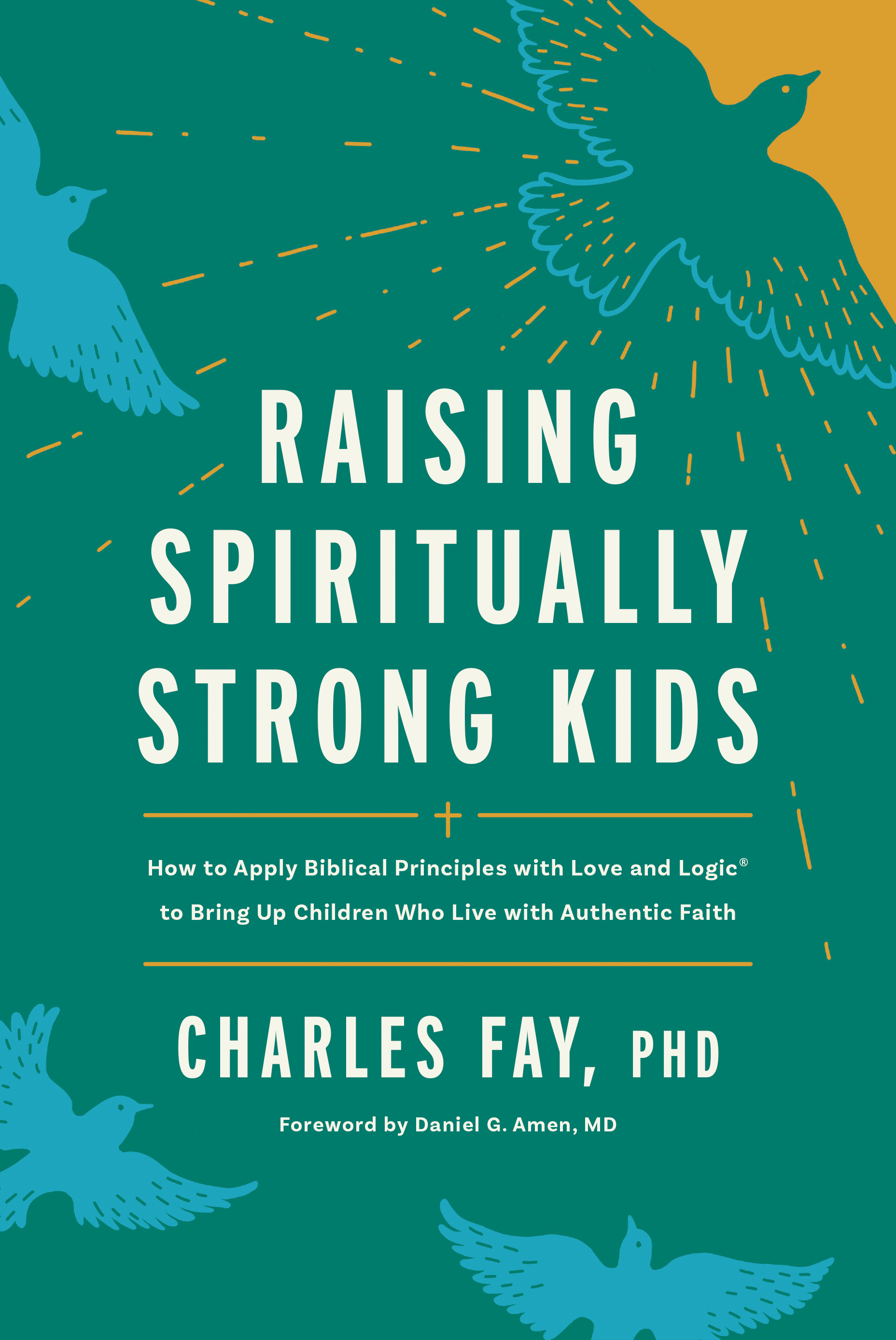
Adapted from Raising Spiritually Strong Kids: How to Apply Principles with Love and Logic® to Bring Up Children Who Live with Authentic Faith by Charles Fay, PhD, releasing in October 2026 from Tyndale House Publishers.
Helpful Links:
Tyndale Media Center Author Page
Copyright information for photo: Author photo by Janssen Photography, Copyright © 2023. All Rights Reserved.
Author’s Links: Love and Logic | Facebook | Instagram | X | YouTube