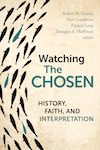

Why Teaching with The Chosen is Powerful
The Chosen is a television drama series that portrays the life of Jesus through a multiseason, episodic format. Created, directed, and cowritten by Dallas Jenkins, the show presents the story of Jesus in a unique way by deeply explor- ing the biblical narratives and imagined backstories of the individuals who came to be his disciples. Jenkins has made significant efforts toward historical plausibility, regularly consulting a panel of advisors that includes a Catholic priest, an evangelical Protestant biblical studies professor, and a Messianic Jewish rabbi. Motivated by a desire to remove “the veil and the walls that [we] sometimes put up between us and the authentic Jesus,” Jenkins has chosen to artistically elaborate on what is recorded in Scripture.4 After all, if one were to take the Gospels and plot the sequence of events on a timeline, fewer than one hundred days from Jesus’s mortal life are recorded! Jenkins remarks, “Movie Bible projects are usually stiff, formal—they go from Bible verse to Bible verse, and everything is very, very black and white. I think we have to round the edges a little bit making this show feel a lot more human [by adding backstories, humor, and human interactions].”5
These creative additions to the narrative recorded in the Bible provide powerful tools for educators. I see at least three ways that The Chosen is helpful in educational settings:
- for increasing the relatability of Scrip- ture for students,
- for stimulating incisive questions in the classroom, and
- for providing variety and alternatives to media depictions of Jesus that already exist.
Increasing Relatability Through Teaching with The Chosen
1 – In The Chosen, Jenkins has developed a diverse cast of characters who face a variety of challenges and thereby endows the stories in the Bible with a lifelike quality that makes them more relatable for viewers. The series devel- ops in-depth characters for many of the women who followed Jesus, includ- ing Mary the mother of Jesus, Mary Magdalene, and Lazarus’s sisters Mary and Martha. It also carves out space for women mentioned only briefly or by implication in the New Testament, such as Joanna and Peter’s wife (named Eden in The Chosen). The faith portrayed by the women in this series can be a powerful way to reach female students who might be grappling with specific questions about what it looks like to be a woman and a follower of Jesus.
Characters are also portrayed as coming from a variety of backgrounds. For example, Little James, one of Jesus’s disciples, is played by Jordan Walker Ross, an actor with severe scoliosis and minor cerebral palsy. After casting Ross, Jen- kins rewrote the role to feature his disability rather than asking him to hide it.6 These types of portrayals used in conjunction with Scripture can help students see the followers of Jesus as real people who made real choices to follow Jesus, and feel empowered to make similar choices in their own lives.
Teaching with The Chosen Fosters Deeper Questions
2 – The creative storylines of The Chosen can also evoke penetrating ques- tions that might not otherwise arise from a cursory encounter with the text. Readers tend to form mental images of characters and settings included in written texts that may or may not correspond to descriptions provided by the author. While readers typically do this subconsciously, filmmakers cannot avoid asking questions and making decisions about a character’s appearance, the size and orientation of physical settings, the tone of voice used, and similar issues. Examining the decisions made by Jenkins in translating the written life of Jesus into the visual medium of film can help students cultivate close read- ing skills. Attention to such details may also enable students to engage with theological, spiritual, and ethical questions in a more meaningful way.
Using Visual Narratives for Classroom Insight
For example, The Chosen builds a storyline around Mary Magdalene (played by Elizabeth Tabish), showing her transformation from being pos- sessed by devils to being a faithful disciple of Jesus (Luke 8:2). Mary is por- trayed as having relatable moments of discouragement, and even relapse, which she overcomes by turning to Jesus for help. While it seems certain that Jesus’s followers faced moments of discouragement, Mary’s experience isn’t drawn directly from the New Testament. However, this plausible portrayal could help students better appreciate the Bible as a resource for persevering in faith in the face of personal setbacks and stumbling blocks in that it indicates that not even those who walked with Jesus were free from challenges.
Another fascinating example is the backstory constructed for Matthew (played by Paras Patel). As an awkward tax collector on the autism spec- trum, Matthew is portrayed as having made a comfortable life for himself by working for the Roman Empire. This is a plausible characterization given the historical evidence suggesting that, while it was often seen as a betrayal of the Jewish people who resented those who collaborated with their impe- rial oppressors, working as a tax collector had the potential to be personally profitable.7 Matthew’s backstory in The Chosen allows the viewer to imagine, first, the emotional toll of losing the approval of his own family and, later, what it might have been like for someone to walk away from comfort and wealth to follow Jesus. This portrayal could invite inspired questions about the kinds of sacrifices required to follow Jesus in our day, and why discipleship is nonetheless worth the cost.
3 – For better or worse, many students today are drawn primarily to visual media—a trend that has accelerated over recent decades with computer and laptop screens becoming nearly ubiquitous. This trend presents a range of educational challenges, as a number of critics have observed.8 Nevertheless, visual media can hold students’ attention when their focus might lag during discussions of the biblical text. The engaging nature of film can therefore be used to help draw students into the biblical world and increase their interest in learning more.
Teaching with The Chosen: Surprises in Scripture
Media representations of Jesus such as those in The Chosen can also be used to challenge ingrained assumptions about the biblical text. When it comes to the Bible, a common obstacle instructors must navigate is the students’ famil- iarity (both real and imagined) with the subject matter. It can be a challenge to get students to read something that they assume they already know. The fresh visual perspective offered by The Chosen can remind viewers just how astonishing the claims made by and about Jesus were for the original audi- ences. Having students watch scenes from The Chosen thus helps make the strange familiar and the familiar strange and expands our ideas and insights into the Gospels.