

The Origins of the Trinity Doctrine
From the beginnings of the Christian movement, the earliest followers of Jesus held a profound paradox in creative tension. On the one hand, the nascent Christian movement, emerging out of Judaism, continued to be ardently monotheistic: “The Lord our God, the Lord is one.” (See Deuteronomy 6:4.) On the other hand, these Christians came to recognize, after Jesus’ resurrection from the dead, that the one living God had come to dwell among us in this enigmatic Teacher. What’s more, Jesus, before his departure, had spoken mysteriously of God giving his own Spirit to his followers and of both God and him, through this Spirit, somehow giving their intimate and personal presence to Jesus’ followers.
And so, from their beginnings, Christians expressed, in various ways, that the word God must now somehow include the person Jesus. What’s more, the teaching of Jesus himself opens to us a window into God’s inner life. According to Jesus, God’s Spirit glorifies him; he, in turn, glorifies God the Father; and God the Father glorifies Jesus. This mutual dance of glory, love, and esteem, according to Jesus, has been in motion from eternity past and will pulsate into eternity future. (For example, John 16:14; 17:4-5) Putting these hints together, Christians realized that the three persons of the one living God exist in a dance of self-giving regard, unconditional affection, and intimate communion. (Read about it here.)
The shorthand way that subsequent generations in the church developed to refer to this mystery was in recognizing God as Trinity. After extended reflection, prayer, debate, and eventual consensus, the church came to affirm the following:
There is one God. Jesus is God. The Spirit of God is God.
In short: There is one God, who is tripersonal—Father, Son, Holy Spirit. Trinity. The church father Gregory of Nazianzus gathers up the wisdom of the church when he instructs, “Worship the Father and the Son and the Holy Ghost, One Godhead; God the Father, God the Son and . . . God the Holy Ghost, One Nature in Three Personalities, intellectual, perfect, Self- existent, numerically separate, but not separate in Godhead.” (Read about it here.)
Wrestling with the Trinity Doctrine
Got a handle on all that?
Didn’t think so.
Me neither.
Nobody ever really gets the Trinity. You can almost hear the sigh of bewilderment from fourth- century bishop Hilary of Poitiers, venturing to teach this topic: “I must undertake something that cannot be limited and venture upon something that cannot be comprehended, so that I may speak about God who cannot be accurately defined.”
The Christian teaching on the Trinity explodes our mental and spiritual circuits.
I’ll be the first to admit that we’re swimming in the deep end of the pool here. But, far from being ethereal or esoteric, the doctrine of the Trinity brims with spiritual and practical meaning.
Why the Trinity Doctrine Matters Today
Think of the choices we have. If you trust yourself to the secular Western view of life, you consider our existence meaningless—one vast, immense accident ending only in death. So what is at the center of life? Meaninglessness. An absurd few minutes with which you should do whatever you want.
If you’re a Christian, you don’t have to live within a story of life that says that your life is an incoherent blip in a cosmic void. And you also don’t simply believe that there’s one God out there somewhere who’s powerful or all-knowing. Christians, uniquely, believe that love is at the heart of the universe. Why? Because love requires interpersonal relationship. And followers of Jesus are bold enough to say that relationships of love are the very heart of God’s interior life. We risk everything on the assertion that the beating heart of all reality, the animating center of all existence, is this: love.
The Trinity Doctrine Reveals God’s Love
Julian of Norwich was a fourteenth-century medieval anchoress: a woman who spent her life in secluded prayer in a tiny cell of a room. She lived out her days in the English city of Norwich, enduring devastating sickness for much of her life. At one point, she became so ill that she thought she was on her deathbed, and it was during this time that she experienced several mystical visions of God, which she later recorded in writings gathered and entitled Revelations of Divine Love. Her writings are the first published work in the English language by a woman.
Near the end of Revelations of Divine Love, Julian describes asking God why she experienced these visions of God’s presence and Jesus’ suffering. This is the response she records:
Do you want to know your Lord’s meaning in this? Be well aware: love was his meaning. Who showed you this? Love. What did he show you? Love. Why did he show it? For love. Hold fast to this, and you will know and understand more of the same; but you will never understand nor know anything else from this for all eternity.
The Trinity Doctrine Shapes Our Story
This is the meaning of all God’s self-disclosure. This is what’s behind our immense, intricate universe, the sprawling narrative of Holy Scripture, and the living, dying, and rising of Jesus, our signature picture of the unseen One. The meaning is Love.
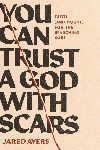
Adapted from You Can Trust a God with Scars by Jared Ayers. Copyright © 2025. Used by permission of NavPress. All rights reserved. Represented by Tyndale House Publishers, a Division of Tyndale House Ministries.
 Rev. Dr. Jared Ayers is a pastor, speaker, professor, and writer. He is a graduate of Western Theological Seminary and the Eugene Peterson Center for Christian Imagination. A pastor for more than two decades, he currently serves as a senior minister at First Presbyterian Church in North Palm Beach, Florida, and as an adjunct faculty member at Palm Beach Atlantic University. Jared is married to Monica, and they’ve been graced with two sons and a daughter.