
We want heroes and want to be heroes.
We imagine ourselves as the Billy Grahams, the Elijahs. We like to imagine ourselves in their company. We want to be that effective. To shape a society where our set of values and preferences is the norm. Where we can fit in and not be troubled. But we are in grave danger if avoiding being troubled becomes a goal. Once we begin telling ourselves that story, it becomes easier to ignore troubling warning signs in our leaders. In what they do and how they treat the people around them while on mission. Our high expectations can lead us to overlook—maybe even kind of want to overlook— symptoms of unhealth or evidence of character flaws that could prove fatal.
As a result our version of Mount Carmel dominates our spiritual landscape, eclipsing other mountains, valleys, and deserts that are soaked with blood and tears. We see Elijah, the fire from heaven, and the defeated prophets, and we tell ourselves this is our future. That our victory is coming in this world. And we repeat the story to drown out any misgivings that would otherwise warn us: you might just have this one wrong. We’re helped along the way by an evangelical culture that incentivizes and reinforces that story and by a broader American culture that continually hungers for celebrities and heroes.
I’m not sure there’s a great defense against it at the moment.
I’m not sure you can go out into the world, green and ambitious, and simultaneously have the inner wisdom to avoid being seduced by the tendency to tell ourselves the stories we want to hear, to resist propping up our heroes so they tower like saints. In some ways we need heroes. And sometimes the hero is real. But Mount Carmel is only half the story for Elijah just as victory is only half the story for most heroes.
The fundamental arc of the Christian story does not ascend from glory to glory.
It bends to the cross. In denying that we, like Peter, might overlook the occasionally drawn sword—we may even draw a sword of our own—to protect the mission. And others among us may be on the receiving end of true harm. And like Peter, when we finally see our expectations starting to crumble, we can find ourselves in denial. A choice lies before us. Stick with the falling hero or let go and enter the darkness of true reflection, accountability, and lament over what happened in our midst. While I don’t know if failure is avoidable, I don’t think it’s a mistake we have to repeat. But we must be willing to bend—to bow, really—and learn.
The alternative is to keep the plotline front of mind and keep putting one foot in front of the other. It’s hard to get out of bed if you know that your dreams are cracking, so you cling to the story that still looks like Mount Carmel. You look for reasons to believe you’re still on the side of Moses, Jesus, and Elijah. And you cling with all your might to every glimmer of confirmation that this story is still true.
Can we just stay here?
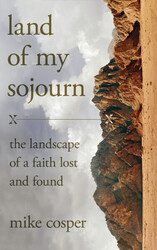
Adapted from Land of My Sojourn by Mike Cosper. ©2024 by Michael D. Cosper. Used by permission of InterVarsity Press. www.ivpress.com.
 Mike Cosper is the director of podcasting for Christianity Today, where he hosts The Rise and Fall of Mars Hill and Cultivated. Mike also served as one of the founding pastors at Sojourn Church in Louisville, Kentucky, from which he launched Sojourn Music, a collective of musicians writing songs for the church. He is the author of several books, including Recapturing the Wonder and Rhythms of Grace. His latest book is Land of My Sojourn.